Getting started
Installing NMRTools
Install NMRTools.jl through the Julia package manager:
using Pkg
Pkg.add("NMRTools")
The examples in this tutorial also use the CairoMakie package for plotting, which can be obtained similarly.
Plot a 1D spectrum
Let's load some example data. This can be a Bruker experiment directory, a specific pdata folder, or an NMRPipe-format file.
using NMRTools, CairoMakie
spec = exampledata("1D_19F")
┌ 5000-element NMRData{Float64, 1} ┐
├──────────────────────────────────┴───────────────────────────────────── dims ┐
↓ F1Dim Sampled{Float64} LinRange{Float64}(-119.5922, -124.16252020246354, 5000) ReverseOrdered Regular Points
├──────────────────────────────────────────────────────────────────── metadata ┤
Dict{Symbol, Any} with 19 entries:
:filename => "/home/runner/.julia/artifacts/8581f841a7ad0ab21edeb8fd0…
:field => 11.7461
:channels => Dict{Symbol, Any}(:f1=>Dict{Symbol, Any}(:offsethz=>-611…
:label => "Example 19F 1D spectrum"
:ns => 64
:format => :pdata
:noise => 424.03
:solvent => "H2O+D2O"
:temperature => 318.151
:nuclei => Set(Nucleus[F19])
:experimentfolder => "/home/runner/.julia/artifacts/8581f841a7ad0ab21edeb8fd0…
:pulseprogram => "zg"
:ndim => 1
:acqusfilename => "/home/runner/.julia/artifacts/8581f841a7ad0ab21edeb8fd0…
:title => "Example 19F 1D spectrum\nSample details in second line\…
:topspin => v"3.2.0"
:date => DateTime("2017-08-07T07:08:12")
:acqus => Dict{Symbol, Any}(:fcuchan=>Dict(0=>0, 4=>0, 5=>0, 6=>0,…
:rg => 76.02
└──────────────────────────────────────────────────────────────────────────────┘
⋮ ⋱ NMRTools provides nmrplot for interactive and publication-quality figures. To plot a 1D spectrum:
fig = nmrplot(spec)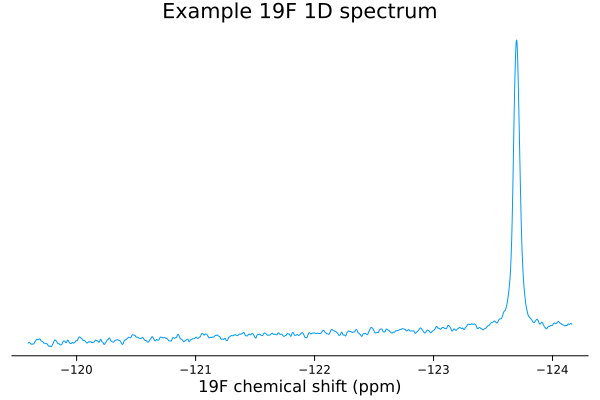
We can zoom in using xlims, or select a chemical shift range from the data directly using the .. selector — the y-axis then rescales to fit only the displayed region:
fig = nmrplot(spec[-124.5 .. -123])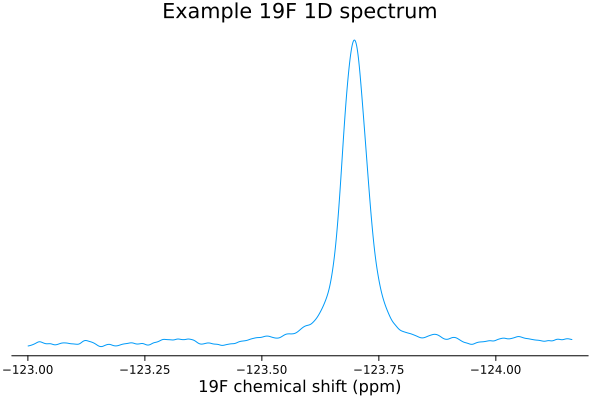
All plots can be saved as high quality vector graphics or PNG files using save:
save("myspectrum.pdf", fig)
save("myspectrum.svg", fig)
save("myspectrum.png", fig)
Plot a 2D spectrum
Two-dimensional spectra are plotted in exactly the same way.
using NMRTools, CairoMakie
spec = exampledata("2D_HN")
fig = nmrplot(spec)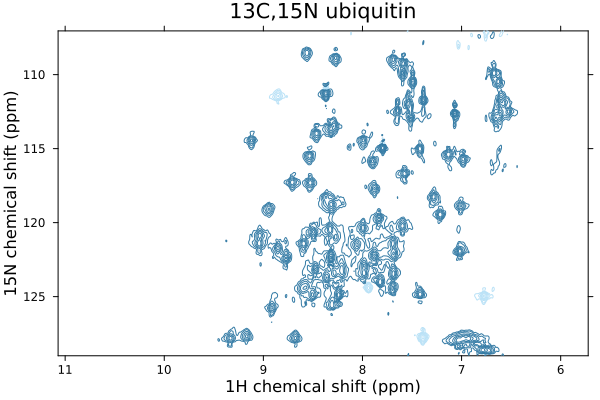
Contour levels start at five times the noise level with a geometric spacing of 1.7. Adjust the number of levels or spacing with the levels and spacing keywords. Use title="" to suppress the title:
fig = nmrplot(spec; levels=4, spacing=2.0, title="")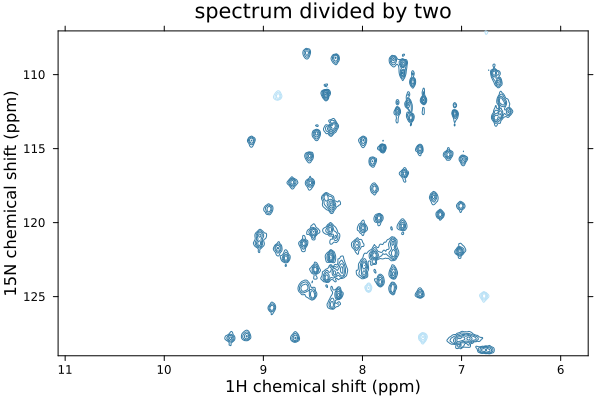
Accessing your data
Spectrum data and associated axis information, metadata, etc, is encapsulated in an NMRData structure.
julia> spec = exampledata("1D_19F")┌ 5000-element NMRData{Float64, 1} ┐
├──────────────────────────────────┴───────────────────────────────────── dims ┐
  ↓ F1Dim Sampled{Float64} LinRange{Float64}(-119.5922, -124.16252020246354, 5000) ReverseOrdered Regular Points
├──────────────────────────────────────────────────────────────────── metadata ┤
  Dict{Symbol, Any} with 19 entries:
  :filename         => "/home/runner/.julia/artifacts/8581f841a7ad0ab21edeb8fd0…
  :field            => 11.7461
  :channels         => Dict{Symbol, Any}(:f1=>Dict{Symbol, Any}(:offsethz=>-611…
  :label            => "Example 19F 1D spectrum"
  :ns               => 64
  :format           => :pdata
  :noise            => 424.03
  :solvent          => "H2O+D2O"
  :temperature      => 318.151
  :nuclei           => Set(Nucleus[F19])
  :experimentfolder => "/home/runner/.julia/artifacts/8581f841a7ad0ab21edeb8fd0…
  :pulseprogram     => "zg"
  :ndim             => 1
  :acqusfilename    => "/home/runner/.julia/artifacts/8581f841a7ad0ab21edeb8fd0…
  :title            => "Example 19F 1D spectrum\nSample details in second line\…
  :topspin          => v"3.2.0"
  :date             => DateTime("2017-08-07T07:08:12")
  :acqus            => Dict{Symbol, Any}(:fcuchan=>Dict(0=>0, 4=>0, 5=>0, 6=>0,…
  :rg               => 76.02
└──────────────────────────────────────────────────────────────────────────────┘
 ⋮      ⋱
Data can be accessed with conventional array indexing, but also using the value-based selectors, Near and ..:
julia> spec[100:105]┌ 6-element NMRData{Float64, 1} ┐ ├───────────────────────────────┴──────────────────────────────────────── dims ┐ ↓ F1Dim Sampled{Float64} LinRange{Float64}(-119.68271044209722, -119.68728167654656, 6) ReverseOrdered Regular Points ├──────────────────────────────────────────────────────────────────── metadata ┤ Dict{Symbol, Any} with 19 entries: :filename => "/home/runner/.julia/artifacts/8581f841a7ad0ab21edeb8fd0… :channels => Dict{Symbol, Any}(:f1=>Dict{Symbol, Any}(:offsethz=>-611… :label => "Example 19F 1D spectrum" :ns => 64 :temperature => 318.151 :experimentfolder => "/home/runner/.julia/artifacts/8581f841a7ad0ab21edeb8fd0… :pulseprogram => "zg" :ndim => 1 :acqusfilename => "/home/runner/.julia/artifacts/8581f841a7ad0ab21edeb8fd0… :title => "Example 19F 1D spectrum\nSample details in second line\… :acqus => Dict{Symbol, Any}(:fcuchan=>Dict(0=>0, 4=>0, 5=>0, 6=>0,… :field => 11.7461 :format => :pdata :noise => 424.03 :solvent => "H2O+D2O" :nuclei => Set(Nucleus[F19]) :topspin => v"3.2.0" :date => DateTime("2017-08-07T07:08:12") :rg => 76.02 └──────────────────────────────────────────────────────────────────────────────┘ ⋮ ⋱julia> spec[Near(-124)]5808.748229980469julia> spec[-124 .. -123.5]┌ 547-element NMRData{Float64, 1} ┐ ├─────────────────────────────────┴────────────────────────────────────── dims ┐ ↓ F1Dim Sampled{Float64} LinRange{Float64}(-123.50060545419717, -123.99978425606656, 547) ReverseOrdered Regular Points ├──────────────────────────────────────────────────────────────────── metadata ┤ Dict{Symbol, Any} with 19 entries: :filename => "/home/runner/.julia/artifacts/8581f841a7ad0ab21edeb8fd0… :channels => Dict{Symbol, Any}(:f1=>Dict{Symbol, Any}(:offsethz=>-611… :label => "Example 19F 1D spectrum" :ns => 64 :temperature => 318.151 :experimentfolder => "/home/runner/.julia/artifacts/8581f841a7ad0ab21edeb8fd0… :pulseprogram => "zg" :ndim => 1 :acqusfilename => "/home/runner/.julia/artifacts/8581f841a7ad0ab21edeb8fd0… :title => "Example 19F 1D spectrum\nSample details in second line\… :acqus => Dict{Symbol, Any}(:fcuchan=>Dict(0=>0, 4=>0, 5=>0, 6=>0,… :field => 11.7461 :format => :pdata :noise => 424.03 :solvent => "H2O+D2O" :nuclei => Set(Nucleus[F19]) :topspin => v"3.2.0" :date => DateTime("2017-08-07T07:08:12") :rg => 76.02 └──────────────────────────────────────────────────────────────────────────────┘ ⋮ ⋱
This also works for multidimensional data. For example:
julia> spec2d = exampledata("2D_HN")┌ 1216×512 NMRData{Float64, 2} ┐ ├──────────────────────────────┴───────────────────────────────────────── dims ┐ ↓ F1Dim Sampled{Float64} LinRange{Float64}(11.07119, 5.722488424064256, 1216) ReverseOrdered Regular Points, → F2Dim Sampled{Float64} LinRange{Float64}(128.9998, 107.04307400088886, 512) ReverseOrdered Regular Points ├──────────────────────────────────────────────────────────────────── metadata ┤ Dict{Symbol, Any} with 20 entries: :rg => 203 :filename => "/home/runner/.julia/artifacts/278430abd2b28a265273e7074… :field => 14.0967 :channels => Dict{Symbol, Any}(:f1=>Dict{Symbol, Any}(:offsethz=>2819… :label => "13C,15N ubiquitin" :ns => 2 :format => :pdata :noise => 502.842 :solvent => "H2O+D2O" :temperature => 276.999 :nuclei => Set(Nucleus[H1, N15]) :experimentfolder => "/home/runner/.julia/artifacts/278430abd2b28a265273e7074… :pulseprogram => "sfhmqcf3gpph.cw" :ndim => 2 :acqusfilename => "/home/runner/.julia/artifacts/278430abd2b28a265273e7074… :title => "13C,15N ubiquitin\n500 uM in 10% D2O, 20 mM Pi pH 6.5, … :topspin => v"6.0.0" :acqu2s => Dict{Symbol, Any}(:origin=>nothing, :sw=>21.9971, :sw_h=… :acqus => Dict{Symbol, Any}(:fcuchan=>Dict(0=>0, 4=>0, 5=>0, 6=>0,… :date => DateTime("2019-11-20T19:41:09") └──────────────────────────────────────────────────────────────────────────────┘ ⋮ ⋱julia> spec2d[8.1 .. 8.3, Near(124)]┌ 45-element NMRData{Float64, 1} ┐ ├────────────────────────────────┴─────────────────────────────────────── dims ┐ ↓ F1Dim Sampled{Float64} LinRange{Float64}(8.297789182848133, 8.10409134799943, 45) ReverseOrdered Regular Points ├──────────────────────────────────────────────────────────────────── metadata ┤ Dict{Symbol, Any} with 20 entries: :filename => "/home/runner/.julia/artifacts/278430abd2b28a265273e7074… :channels => Dict{Symbol, Any}(:f1=>Dict{Symbol, Any}(:offsethz=>2819… :label => "13C,15N ubiquitin" :ns => 2 :temperature => 276.999 :experimentfolder => "/home/runner/.julia/artifacts/278430abd2b28a265273e7074… :pulseprogram => "sfhmqcf3gpph.cw" :ndim => 2 :acqusfilename => "/home/runner/.julia/artifacts/278430abd2b28a265273e7074… :title => "13C,15N ubiquitin\n500 uM in 10% D2O, 20 mM Pi pH 6.5, … :acqus => Dict{Symbol, Any}(:fcuchan=>Dict(0=>0, 4=>0, 5=>0, 6=>0,… :field => 14.0967 :format => :pdata :noise => 502.842 :solvent => "H2O+D2O" :nuclei => Set(Nucleus[H1, N15]) :topspin => v"6.0.0" :acqu2s => Dict{Symbol, Any}(:origin=>nothing, :sw=>21.9971, :sw_h=… :date => DateTime("2019-11-20T19:41:09") :rg => 203 └──────────────────────────────────────────────────────────────────────────────┘ ⋮ ⋱
A plain array of data for the spectrum can be obtained from this using the data command:
julia> data(spec)5000-element Vector{Float64}:
 4671.5184326171875
 4675.192687988281
 4679.9979248046875
 4685.8551025390625
 4692.506896972656
 4699.526428222656
 4706.362731933594
 4712.417419433594
 4717.134460449219
 4720.0810546875
    ⋮
 5900.0340576171875
 5896.165588378906
 5891.2984619140625
 5885.714294433594
 5879.7239990234375
 5873.638427734375
 5867.738952636719
 5862.253173828125
 5857.3370361328125
Similarly, a plain vector containing axis values can be obtained from this using the data command, passing an additional argument to specify the dimension. This can either be a number or the axis type, e.g. F1Dim:
julia> data(spec, 1)5000-element LinRange{Float64, Int64}:
 -119.592, -119.593, -119.594, -119.595, …, -124.161, -124.162, -124.163